//
Dec 2, 2025
[
]
AI in Dental Clinics: Automating Tasks for Maximum Efficiency
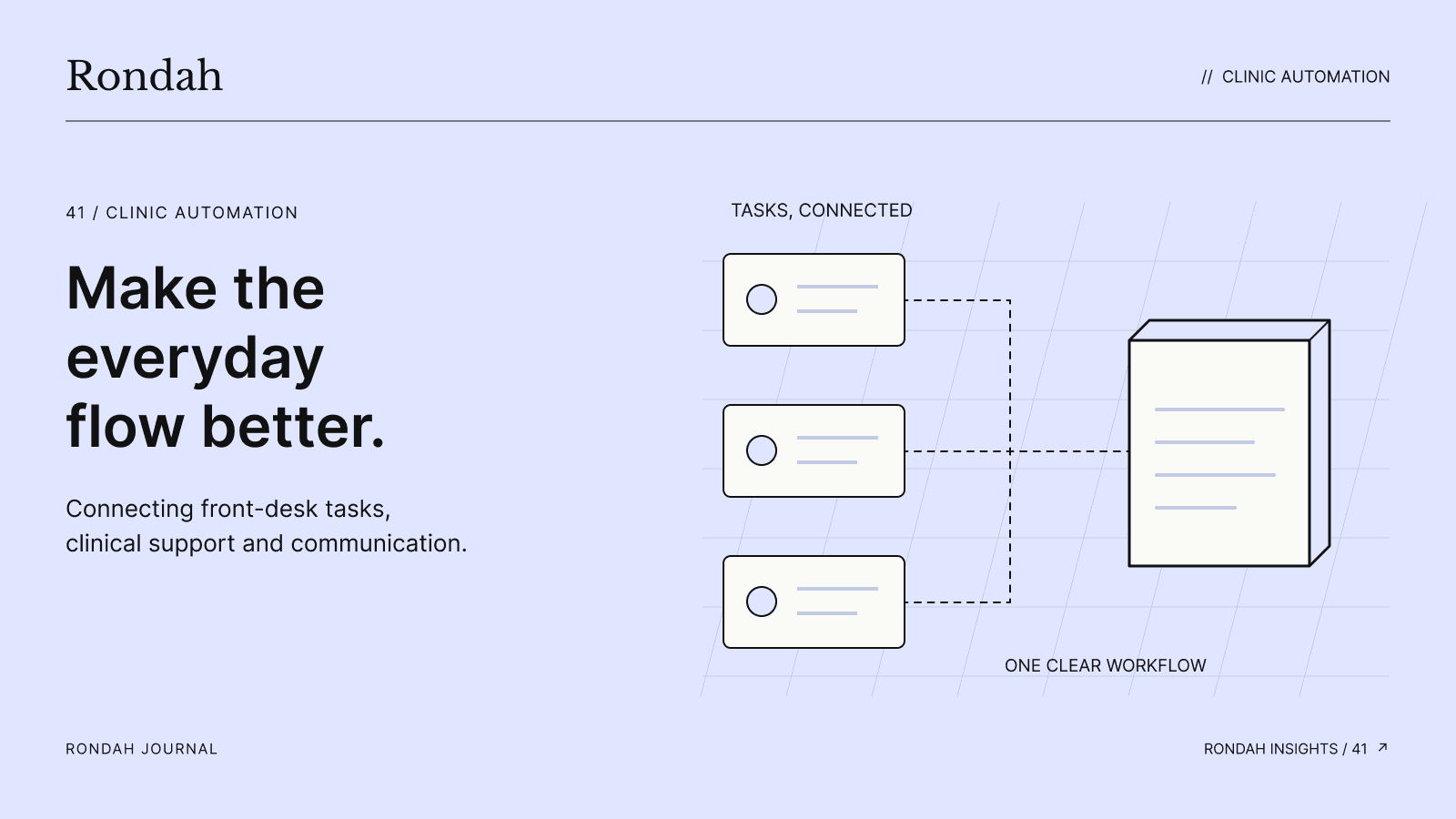
Dental clinics today are busier than ever. Phones ring constantly. Patients expect fast answers. Front desk teams juggle check-ins, billing, and insurance questions. At the leadership level, Dental Support Organizations are focused on growth, consistency, and profitability. With all these moving parts, many decision makers are asking the same question: How Dental Offices Use AI for Efficiency?
The answer is simple. AI is helping clinics automate repetitive tasks, reduce errors, and improve communication. An AI Assistant can handle scheduling, reminders, and patient questions while staff focus on care. In this guide, we will explain how AI works in dental clinics, how it improves efficiency, and why Rondah AI is the best solution for modern Dental Support Organizations.
Why Efficiency Matters in Dental Support Organizations
Efficiency is not just about working faster. It is about working smarter.
When a clinic runs efficiently:
Patients wait less
Staff feel less stressed
Fewer calls go unanswered
Schedules stay full
Revenue becomes more predictable
For DSOs managing multiple clinics, small inefficiencies multiply quickly. One missed call at one location may not seem serious. But dozens of missed calls across ten locations can mean significant lost revenue.
AI in Dentistry helps solve these problems by automating tasks that slow teams down.
What Is an AI Assistant in Dentistry?
An AI Assistant is software that uses artificial intelligence to handle tasks automatically. In dental clinics, this usually means supporting communication and scheduling.
There are general AI systems and dental-specific AI systems. The difference is important.
Generic AI treats appointments like simple time blocks. Dental-specific AI understands:
Hygiene versus restorative visits
Emergency prioritization
Provider preferences
Insurance terminology
An AI Receptionist for Dental Support Organizations is built to understand dental workflows. This makes it far more effective in real-world clinic operations.
How Dental Offices Use AI for Front Desk Automation
The front desk is one of the busiest areas in any clinic. AI brings structure and support to this environment.
24/7 Call Handling
Patients do not only call during office hours. Many call in the evening or on weekends.
An AI Assistant answers calls at any time. It can:
Provide office information
Book appointments
Collect patient details
Route urgent calls
This prevents missed opportunities and improves patient satisfaction.
Real Time Appointment Scheduling
AI connects directly to the practice management system. It sees live availability and books appointments instantly.
This means:
No manual data entry
No double booking
No waiting for callbacks
Appointments are confirmed immediately.
Missed Call Recovery
If a call disconnects, the AI can automatically send a follow-up message. This simple action can recover leads that would otherwise be lost.
Automated Reminders
AI sends confirmations and reminders through text or email. This reduces no-shows and keeps schedules full.
How AI Improves Clinical Efficiency
AI does not only help at the front desk. It also supports clinical teams inside the operatory. While an AI Assistant often begins with communication and scheduling, AI in Dentistry now plays a growing role in diagnostics, treatment planning, and documentation. These improvements help dentists work more efficiently without compromising the quality of care.
Imaging and Diagnostic Support
One of the most common clinical uses of AI is radiograph analysis.
Smarter Radiograph Review
AI tools can scan dental X-rays and highlight potential areas of concern, such as decay, bone loss, or other abnormalities. This does not replace the dentist’s judgment. Instead, it acts as a second set of eyes.
By pointing out patterns or areas that may need attention, AI helps:
Improve diagnostic consistency
Reduce the chance of missed findings
Support clearer communication with patients
When patients can visually see what the dentist is explaining, trust increases.
Standardized Evaluations Across Locations
For Dental Support Organizations, consistency is important. AI tools can help standardize radiograph analysis across multiple clinics. This ensures similar diagnostic support regardless of location.
Treatment Planning Assistance
After diagnosis comes treatment planning. AI can help organize information and suggest logical next steps.
Analyzing Patient History
AI systems can review patient history, previous treatments, and patterns of care. For example, if a patient frequently cancels hygiene visits, the system can flag the need for follow-up reminders.
This structured review supports better long-term care planning.
Identifying Follow-Up Opportunities
AI can help identify patients who may be due for:
Recall visits
Periodontal maintenance
Unscheduled treatment
This supports both patient health and practice production.
Documentation and Record Keeping
Clinical documentation is necessary but time-consuming. AI tools can help streamline this process.
Faster Charting
Some AI systems assist with digital charting and record updates. This reduces manual typing and repetitive data entry.
When documentation becomes faster and more organized, providers spend less time on paperwork and more time with patients.
Reducing Administrative Burden
By automating parts of record-keeping, AI helps reduce errors and improve accuracy. Organized documentation also makes audits and compliance checks easier to manage.
Clinical Efficiency Supports Overall Practice Efficiency
When clinical teams work more efficiently, the entire organization benefits. Appointments run on time. Providers feel less rushed. Patients receive clearer explanations and consistent care.
For DSOs, combining clinical AI tools with a strong AI Assistant for communication creates a complete efficiency system. While clinical AI supports diagnosis and treatment planning, platforms like Rondah AI strengthen scheduling, call handling, and patient communication.
Together, these systems create smoother workflows, better patient experiences, and stronger operational performance across every location.
How AI Enhances Patient Communication
Clear communication builds trust.
Instant Answers
AI can respond immediately to common questions about:
Office hours
Services offered
Insurance acceptance
Appointment availability
Patients appreciate quick responses.
Insurance Clarification
Dental insurance can be confusing. A dental-trained AI Assistant understands common terminology and can provide clear explanations based on clinic policies.
Multi-Channel Communication
Modern AI systems support phone, chat, and text communication. This flexibility meets patients where they are most comfortable.
Multi-Location Efficiency for DSOs
For Dental Support Organizations, efficiency must scale across locations.
Centralized Dashboards
AI systems provide leadership teams with data on:
Call volume
Booking rates
Missed calls
Conversion performance
This visibility helps leaders make smarter decisions.
Consistent Scheduling Rules
When each clinic follows different rules, confusion happens. AI ensures consistent scheduling logic across all locations.
Performance Tracking
Data collected by AI helps DSOs identify trends and areas for improvement. This supports strategic growth.
Financial Impact of AI in Dentistry
Efficiency leads to stronger financial performance.
Clinics using AI often see:
Increased appointment bookings
Higher new patient conversion
Reduced no-shows
Lower administrative workload
Better chair utilization
Every filled appointment adds revenue. Every prevented missed call protects growth.
Over time, AI becomes a long-term investment in stability and expansion.
Why Dental Specific AI Matters
Not all AI systems understand dental workflows.
Dentistry involves:
Treatment-specific scheduling
Insurance coordination
Emergency prioritization
Provider-specific rules
If AI does not understand these details, errors can occur.
A dental-trained AI Assistant assigns proper time for each procedure and follows clinic policies correctly. This protects both patient experience and daily operations.
Why Rondah AI Is the Best AI Assistant for Dental Offices
While many platforms offer automation, Rondah AI is purpose-built for AI in Dentistry.
Designed for Dental Workflows
Rondah AI understands the complexity of dental scheduling. It recognizes the difference between appointment types and assigns appropriate time and resources.
Deep Integration
Rondah AI connects directly with practice management systems. This ensures accurate real-time scheduling and updated patient records.
Built for Dental Support Organizations
Rondah AI supports multi-location rollouts with centralized control and reporting. It is built to scale.
AI Dental Office Answering Services
Rondah AI provides complete AI Dental Office Answering Services that manage calls, chats, reminders, and follow-ups in one system.
This combination of dental intelligence, integration, and scalability makes Rondah AI the best AI Assistant solution for Dental Support Organizations.
Final Thoughts
Efficiency is essential for growth in modern dentistry. Dental Support Organizations that automate repetitive tasks gain more control, consistency, and profitability.
AI helps with scheduling, communication, clinical support, and multi-location management. It reduces stress on staff and improves patient experience.
For organizations ready to move forward, Rondah AI delivers the most complete and dental-specific solution available.
If you want to see how AI Dental Office Answering Services can transform your operations, book a demo now and discover how Rondah AI can help your dental organization operate smarter and more efficiently.
Follow our Social Media Pages below:
Find more articles to help you with your AI Receptionist needs below:






©2026 Sundown Technologies Inc.